GLOBAL INVOLVEMENT
SUPPORTING OUR COMMUNITIES
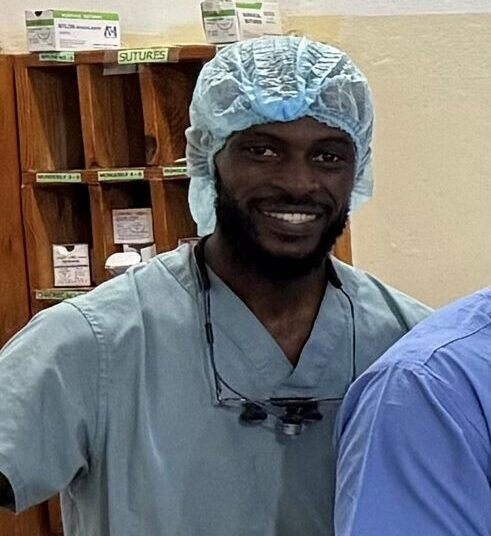
TEACHING DR. KIMARO
Dr. Adam Bakker | TCOF Board Member
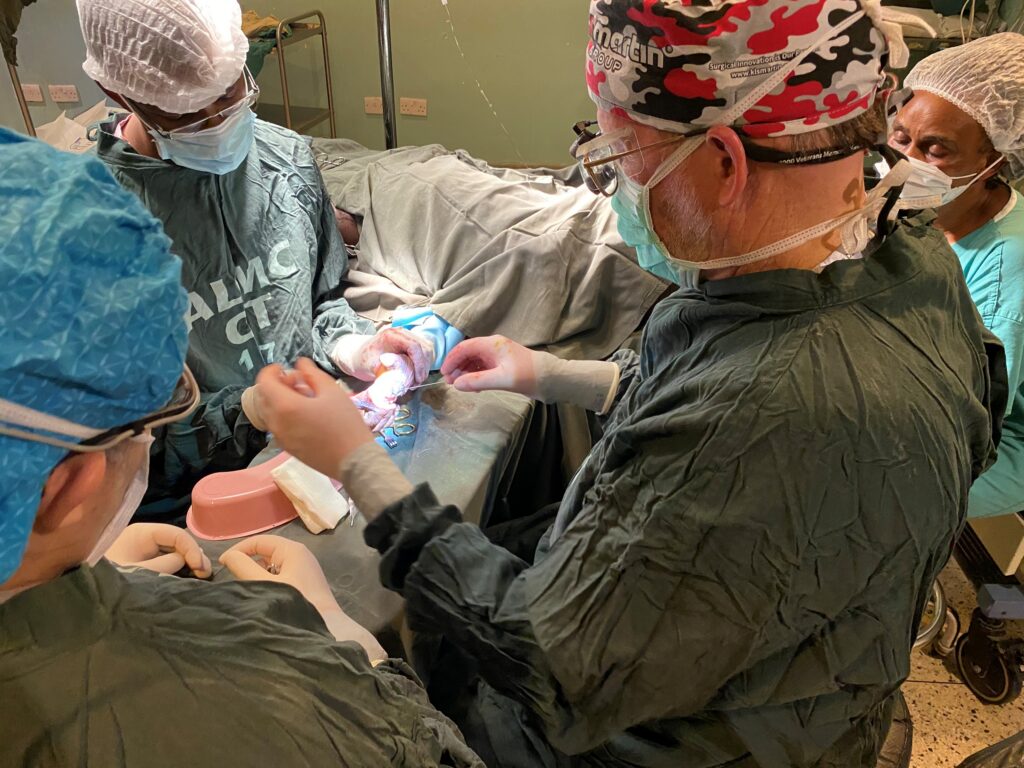
For the past nine years, I have volunteered as a surgeon in Tanzania, primarily performing operations on children to release burn scar contractures. These surgeries involve freeing scarred hands, wrists, and elbows so children can regain use of their extremities. Many of these burn injuries are severe and long neglected.
Burns like these are tragically common in Tanzania. They use fire every day to sanitize drinking water, heat huts, cook food, and repel mosquitoes. These fires burn in open pits at the center of the home, and too often children fall into them and suffer devastating burns.
Volunteering in Tanzania and performing these surgeries is deeply impactful and rewarding work. But surgery alone is not enough. One of the most meaningful and lasting parts of this program is the opportunity to work alongside Tanzanian surgical residents and invest in their training.
One year, I worked with a new resident, Dr. Kimaro. He made a strong impression on me because of how kind and soft-spoken he was. Like most new surgical residents, his skills were just beginning to develop, and his experience was limited.
During the week we go to Tanzania, the hospital experiences one of its busiest times of the year. We bring a high volume of cases, and surgeries take place every day, all day long. That creates tremendous opportunities for learning. Part of our responsibility was to teach Dr. Kimaro.
Depending on what is being taught, there are many ways to transfer knowledge from one physician to another. By reading medical textbooks, we gain insight into disease processes. Through lectures, we learn the biology of tissue healing. We study the bending moment of a plate to understand how best to stabilize a complex fracture using the principles of Newtonian physics. All of this knowledge can be acquired without ever stepping into an operating room.
But in surgery, experience is everything.
Without experience, a surgeon will never know the distinct feel of drilling through both cortices of the distal humerus to place a screw, or the delicate precision required to repair a lacerated nerve with suture finer than a strand of human hair. The rigorous medical training we receive in the United States is among the best in the world. It is organized, intentional, and refined through years of development. We have access to the most current technologies and advanced techniques. In Tanzania, medical education and surgical training are still evolving.
In the years since I first met him, Dr. Kimaro has become proficient. He completed his training and is now an attending surgeon at that same hospital where we trained him. He performs many of the same surgeries we do throughout the rest of the year and is fostering next generation of Tanzanian surgeons.
Our volunteer group helped teach Dr. Kimaro how to suture, how to properly hold a scalpel, and how to identify vital anatomy.
Now he is the one doing the teaching.